November 16, 2026
Essential Forms and Tags for a Newly Opened Dealership
By @dealercompliancehub
Getting Started with the Right Paperwork
When you open a dealership, especially one dealing in used cars, the paperwork side of the business can feel overwhelming. Beyond the lot and the inventory, you need the right forms and tags to operate legally and handle each sale smoothly. The items you keep on hand fall into a few clear categories: temporary tags, registration forms, title paperwork, and dealer plates. Getting these right from the start saves you from delays, fines, and unhappy buyers.
Temporary Tags and Dealer Plates
One of the first things a new dealership needs is a supply of temporary tags. These allow a buyer to drive a vehicle off the lot legally while the permanent registration is processed. Most states require that a temporary tag be displayed in the rear window or on the license plate holder. You will also need dealer plates for vehicles used in the course of business, such as test drives, moving inventory, or delivering a car. Dealer plates serve as a kind of floating registration for the dealership’s own vehicles, and they come with specific rules about who can drive them and for what purpose. Keep a log of which plate is on which vehicle at all times, as record keeping is often required by state law.
MRV-2 Forms and Vehicle Registration
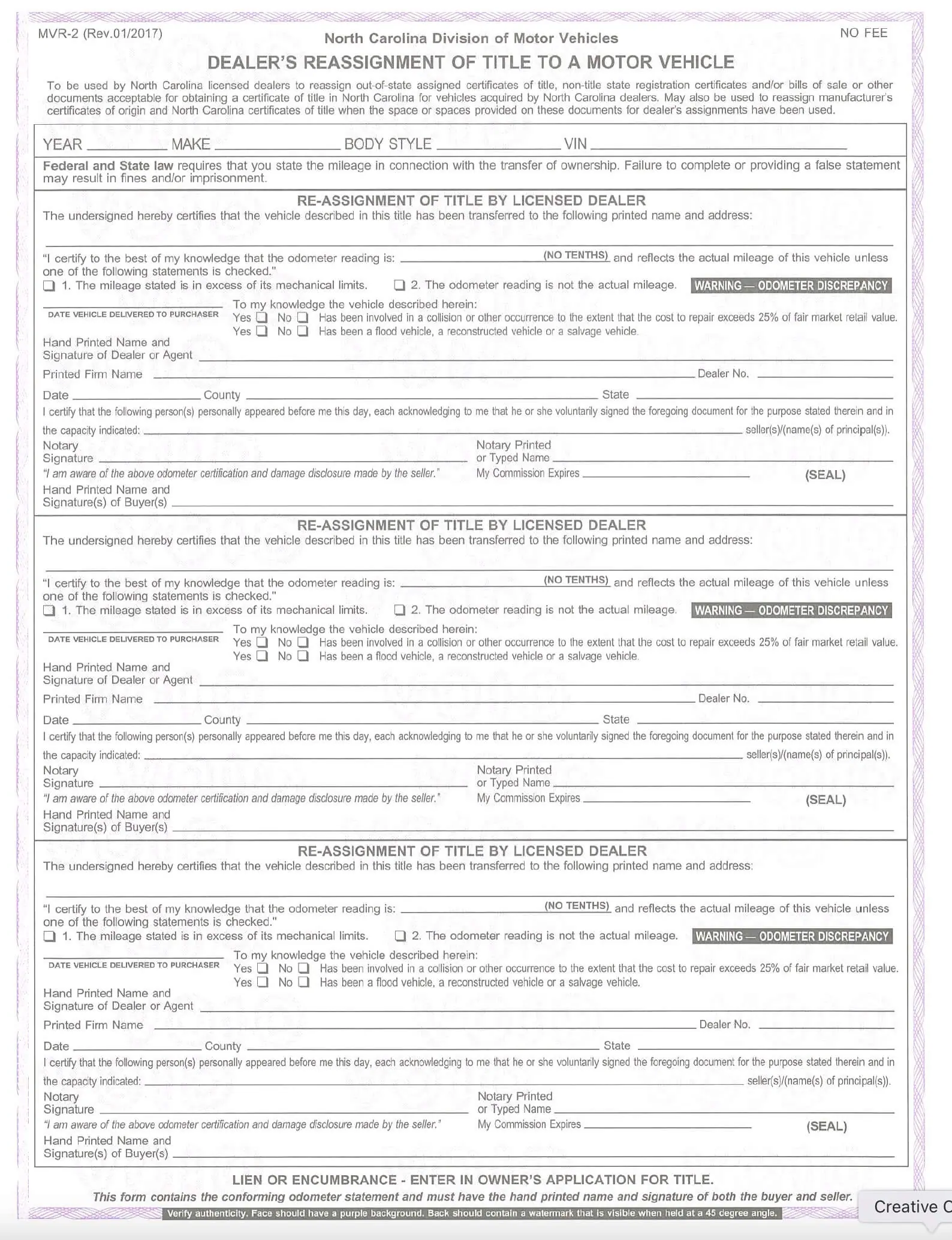
For many independent dealers, the MRV-2 form is a core document. This is the official application for a certificate of title and vehicle registration in some states. When you sell a car, the buyer needs this form filled out correctly to transfer ownership and get their plates. Having a stack of MRV-2 forms in your office means you can complete the transaction on the spot rather than sending the buyer to the DMV. Beyond the MRV-2, you will want a general supply of vehicle registration applications for any state where you do business, especially if your lot is near a state line. Some states now accept electronic registration, which can speed up the process, but you still need a paper backup for the buyer’s records and your own files.
Title Paperwork and Buyer Information
Every sale involves title paperwork. You need a bill of sale, an odometer disclosure statement, and a title assignment form. These documents protect both you and the buyer by recording the vehicle’s history and the transfer of ownership. Buyer information forms are also critical. They collect the purchaser’s name, address, driver’s license number, and contact details. This information goes on the title application and helps you verify the buyer’s identity. Keep copies of these forms in each deal file, as they may be needed for audits or if a dispute arises later.
Record Retention and Compliance
It is not enough to have the right forms. You must also keep them organized and retain them for the required period. Most states require dealerships to hold onto transaction records for several years. This includes copies of the title, bill of sale, temporary tag receipts, and any correspondence with the buyer. A simple filing system, whether paper or digital, saves headaches during an audit. Some dealers use a binder for each month’s transactions; others scan everything into a secure folder. The key is to know where each document is and to be able to produce it quickly when asked. Good record keeping also helps you manage inventory and track which vehicles have been sold, which are still on the lot, and which are being used for parts.
Ordering and Stocking Supplies
Once you know what you need, the next question is where to get it. Many dealer associations and state-specific agencies sell the necessary forms and tags in bulk. You will typically order temporary tags, MRV-2 forms, and dealer plates through the same channels. It is wise to keep a small surplus on hand, especially for temporary tags, because you never know when a busy month will drain your supply. If you run out, you may have to turn away a sale or send the buyer to the DMV, which hurts your reputation. A good rule is to order a new batch when you are down to about 20 percent of your usual stock. That way you always have a cushion.
When you are sourcing these materials, look for reliable paperwork resources for dealerships that have been around for a while. A steady supplier means consistent form quality and fewer errors in printing or layout. You want forms that match the current state requirements, because using an outdated form can delay a title transfer or trigger a fine. Check the expiration dates on any pre-printed forms, and discard old versions promptly.
What to Ask Your Supplier
Before placing an order, ask whether the forms are the latest version approved by your state’s DMV. Also ask about delivery times: temporary tags are often time-sensitive, so a two-week shipping delay can be a problem. Some suppliers offer rush delivery for an extra fee. If you plan to do a high volume of sales, consider ordering in larger quantities to reduce per-unit cost and reorder frequency. Finally, confirm that the tags and plates you order are compatible with your state’s electronic registration system if you use one. Some states require a specific tag format or a unique serial number that ties back to your dealership.
Keeping It All Organized
Having the forms is only half the battle. You also need a system for using them efficiently. Many dealers keep a master checklist for each sale that includes every required document: temporary tag, MRV-2 form, bill of sale, odometer statement, title assignment, and buyer information sheet. As each piece is completed, the checklist is marked off. This reduces the chance of missing a document and having to call the buyer back. It also helps new employees learn the process quickly. Some dealers create a simple folder for each vehicle’s paperwork, with the checklist taped to the front. When the sale is done, the folder goes into a locked cabinet for storage.

Another area that benefits from organization is dealer plate management. Keep a logbook that records which plate is on which vehicle, the date, the driver’s name, and the purpose of the trip. This log is essential if you are ever pulled over or audited. It also helps you track mileage for business use versus personal use, which matters for tax purposes. Some dealerships use a digital log on a tablet, but a simple paper logbook works just as well as long as it is kept up to date.
Common Pitfalls to Avoid
New dealers often underestimate how many temporary tags they will go through. A busy month can eat through a box of 100 tags quickly, especially if you sell a mix of cars and need to issue tags for test drives and deliveries. Running out forces you to either delay sales or drive to the DMV for replacements, both of which cost you time and money. Another common mistake is using the wrong form version. States update their forms periodically, and using an old one can result in the application being rejected. Check for updates at least once a quarter, and subscribe to your state’s dealer newsletter or association alerts to stay informed.
Title paperwork errors are another headache. A missing signature, a wrong VIN digit, or an incorrect odometer reading can hold up the title transfer for weeks. The buyer may become frustrated, and you may have to redo the paperwork at your own cost. Training your staff to double-check every entry before the buyer leaves the lot is a simple habit that prevents these problems. Some dealers use a second person to verify the documents before the sale is finalized.
Building a Reliable System
Ultimately, the goal is to have a system that handles the paperwork without requiring constant attention. That means stocking the right forms and tags, training your team on their use, and setting up a filing process that makes retrieval easy. Over time, you will learn which documents are most often requested by buyers and which forms cause the most delays. Adjust your stock and your process accordingly. The effort you put into organizing your paperwork resources for dealerships early on pays off in fewer headaches and smoother transactions later.

For dealers in the Carolinas, Carolinas Independent Automobile Dealers Association, located at 5643 Harrisburg Industrial Park Dr, Harrisburg, NC 28075, USA, can be reached at +1 704-455-2117 for assistance with forms, tags, and other resources.
Carolinas Independent Automobile Dealers Association is also on Facebook.
❧